Machine translation of the Portuguese Wikipedia article (November 2026 version).
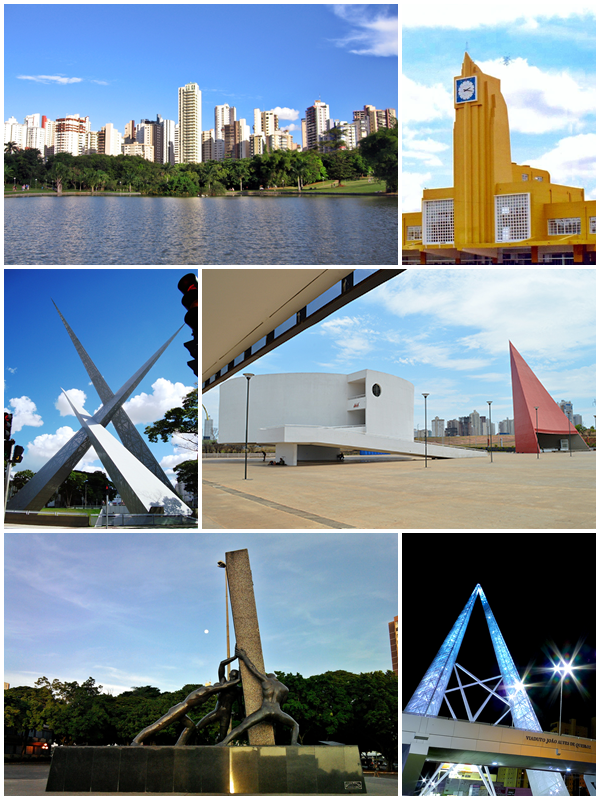
Goiânia is the capital of the Brazilian state of Goiás. It lies about 209 km from Brasília, the federal capital, covers an area of approximately 728.296 km², and has a continuous geography with few hills and lowlands, characteristic of a region of the Central Plateau of Brazil. It consists of two urban cores: the seat district and the district of Vila Rica.
Located in the centre of its state, it was planned and built to be the political and administrative capital of Goiás under the influence of the March to the West (Marcha para o Oeste), a policy developed by the Vargas government to accelerate development and encourage the settlement of Brazil's Central-West. The close ties of friendship and political interactions between Pedro Ludovico Teixeira and Vargas contributed greatly to this undertaking. It experienced rapid population growth from the 1960s onward and reached one million inhabitants in 1996. From its beginnings, its architecture was influenced by Art Deco, which shaped the appearance of the city's first buildings.
Text: Wikipedia · CC BY-SA 4.0 · Read the full article on Wikipedia (in Portuguese)